Gracetown Kite Festival
EVENT STORY
The Gracetown Kite Festival is an annual, free community event held in Gracetown, Western Australia, typically on the last Sunday in November. It is a popular, family-friendly gathering that brings together locals and visitors to celebrate art, community and the coastal environment, featuring hundreds of kites.
WHY THEY NEEDED OUR SUPPORT AND WHAT THEY WANTED TO GAIN
The Gracetown Kite Festival, now in its seventh year, was ready to move into a more professional phase of event development. The organiser could see strong potential for growth, but needed support to refine the festival’s direction, strengthen its long-term sustainability and build a clearer framework for future expansion.
The main pain points were around planning for growth in a structured way, developing stronger digital assets such as a website and promotional materials, and identifying innovative but practical ways to evolve the festival while keeping it community-based and authentic. The organiser was also looking for a model that could be scaled and transferred to other regional settings.
WHAT THEY GAINED FROM PARTICIPATING
Participating in the training gave the organiser the confidence and practical tools to approach regional event development more strategically. It helped shift the focus beyond delivering a single annual festival towards building a scalable and transferable event model.
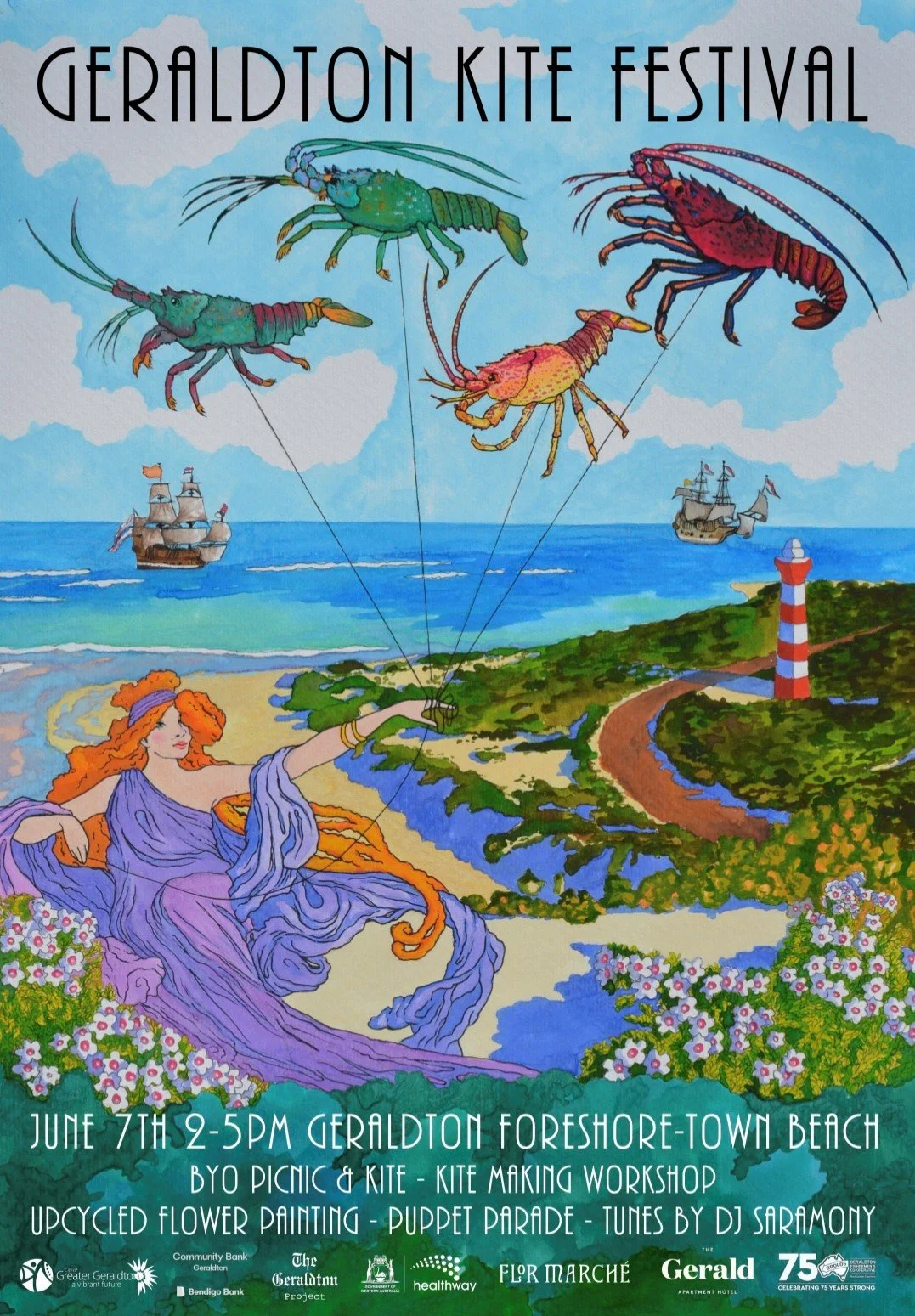
This approach is now being applied not only to the Gracetown Kite Festival, but also to a new inaugural event in Geraldton, to be held in June 2026. Both festivals are being strengthened through more intentional experience design, including Aboriginal-led kite-making workshops in the lead-up to the events.
In Gracetown, these workshops will be led by Wardandi Elder Vivien Brockman Webb and Wardandi Custodian Mitchella Hutchins. In Geraldton, they will be led by Yamatji artist Nicole Dickerson.
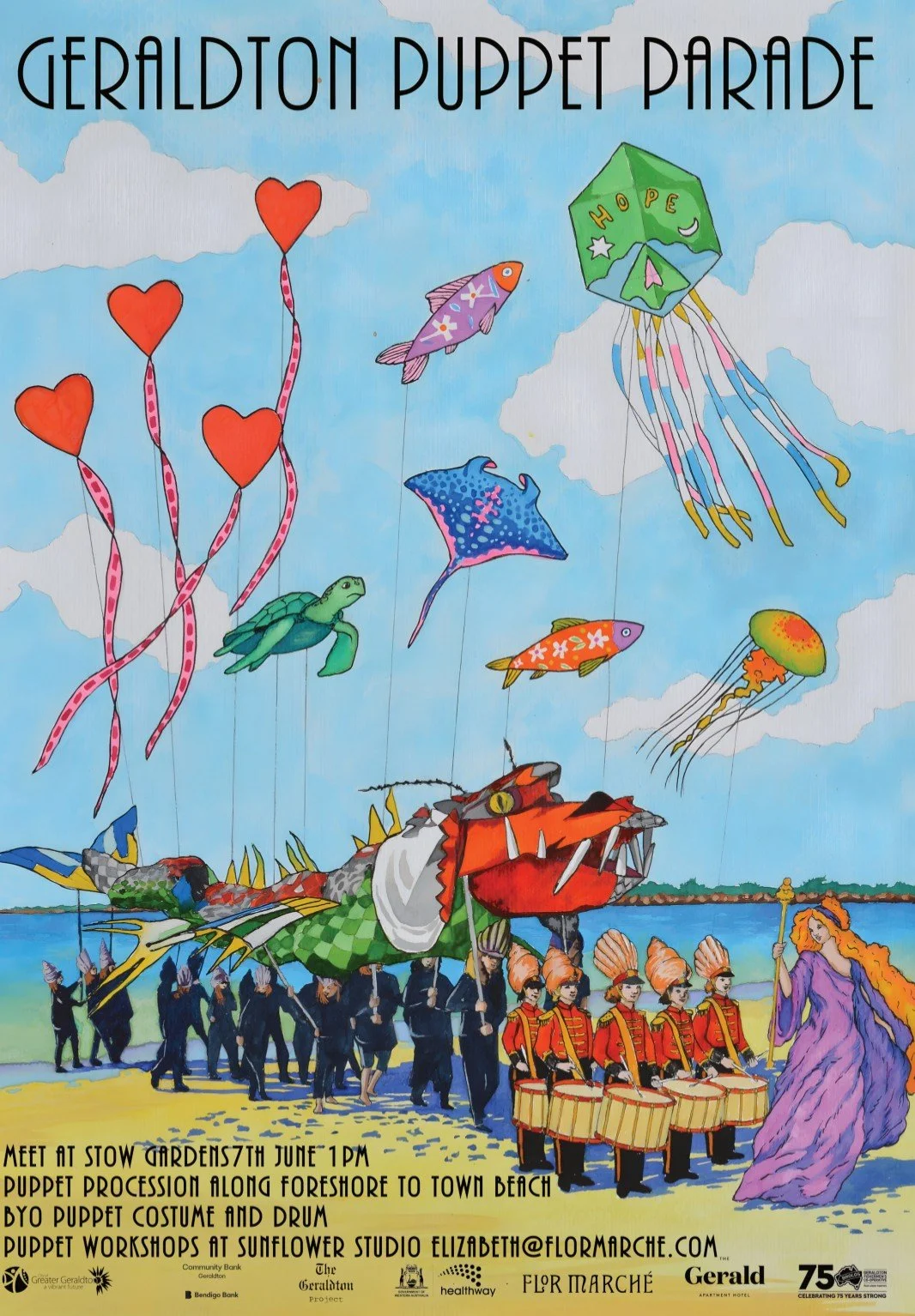
This work, along with complementary initiatives such as a giant puppet parade along the foreshore in Geraldton, reflects stronger alignment with the priorities of Creative Australia and Regional Arts WA, which may improve the strength of future grant applications.
TOP 3 LEARNINGS/OUTCOMES
Strategic growth needs structure: The process highlighted the importance of moving from a passion-led event model to a more professional and strategic approach, with clear planning for growth, audience development, partnerships and sustainability.
Digital assets are essential: The course reinforced the value of building strong digital foundations, including a website and professional promotional material, to improve visibility, audience engagement and event credibility.
A successful regional event model can be scaled and transferred: One of the most valuable outcomes was recognising that what has been built in Gracetown can be adapted and expanded into other regional communities. This is now being put into practice in Geraldton, creating a model that is both scalable and transferable while remaining locally grounded and culturally respectful.
The Signature Program gave me a formalised approach, enabling a professional and structured foundation to build upon, allowing my regional events to evolve and incorporate innovative pathways.